|
Learning Objectives:
1. Attendees will learn how to identify the similarities and differences between sustainability, historic adaptation, and historic preservation. The intersection and differences were ultimately the guiding design principles for the project. Attendees will:
- Learn about definitions for historic preservation and historic adaptation and how those can be competing interests.
- Learn about alignment of historic adaption and sustainability by repurposing the existing site, building, and materials.
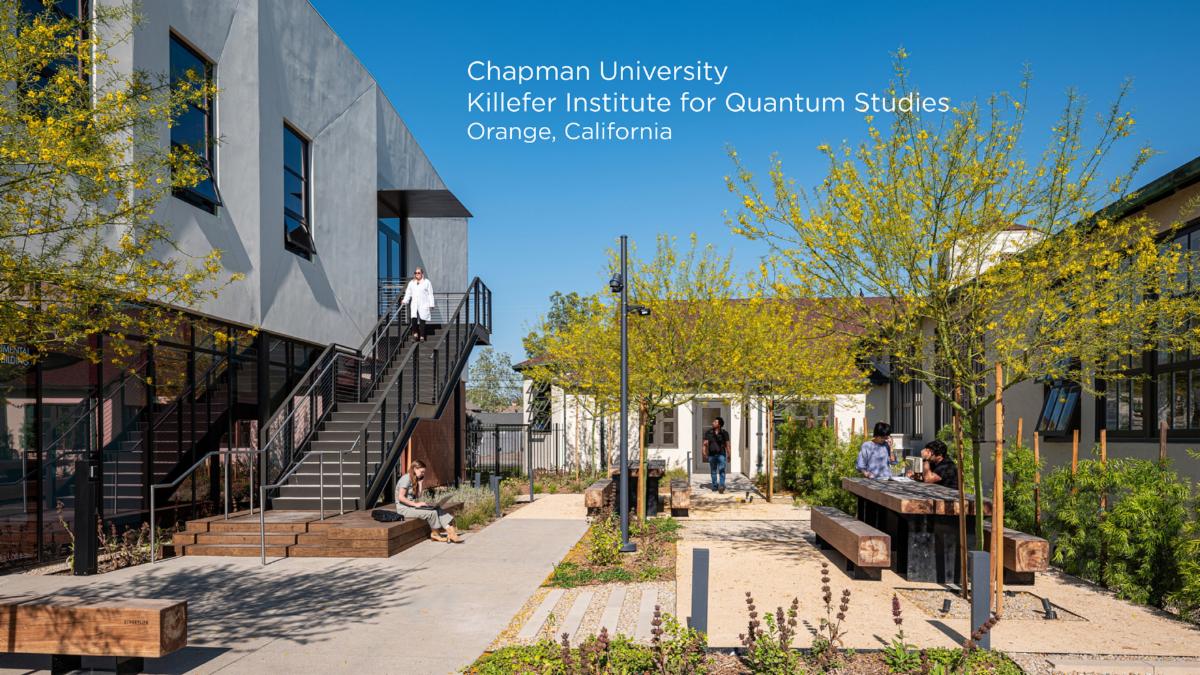
- Learn how the Chapman University 3-courtyard scheme celebrates sustainable siting principles such as heat island effect, landscape restoration, tree preservation, and ultimate layout/floor plan for the campus.
2. Demonstrate how historical social innovation translated into design innovation for the Chapman University Daniele C. Struppa Research Park: Institute for Quantum Studies. The existing Killefer school was one of the first schools in the country to voluntarily desegregate and its repurposed program in quantum mechanics continues to push this existing campus/site into forward thinking conversation. Attendees will learn how:
- The Institute for Quantum Studies embraced the history of the site, character of existing elements, and was a key focal point in programming visioning sessions. This inspired the commitment to historical preservation of the exterior design of existing Killefer school and utilizing existing elements as key design features.
- The presenters will describe existing function of Killefer school and its historical context.
- The presenters will describe the current function of Chapman University Daniele C. Struppa Research Park: Institute for Quantum Studies.
3. Attendees will learn how existing elements such as the wood floors, large bell in cupola, chalkboard, oak and cypress trees were identified, repaired, and repurposed to celebrate the longevity of the historical Killefer school structure. The presenters will discuss:
- Chalkboard repurposing – original slate was the preference for end users. The presenters will discuss the prior and current use of chalkboard.
- Chapman University’s commitment to passive ventilation and the restoration analysis and effort required to restore existing windows.
- The reuse of all key existing element features and challenges they faced with the existing roof.
4. Attendees will learn how Chapman’s vision for increased accessibility, gender-neutral restrooms, and commitment to collaboration created a space that can be engaged by the entire campus. The presenters will discuss Chapman’s commitment to:
- All restrooms on campus are gender neutral
- Multiple accessible pathways to buildings and multiple labs providing accessibility.
- Key collaborative nodes/incubators on campus and how they are dispersed throughout campus.
|